
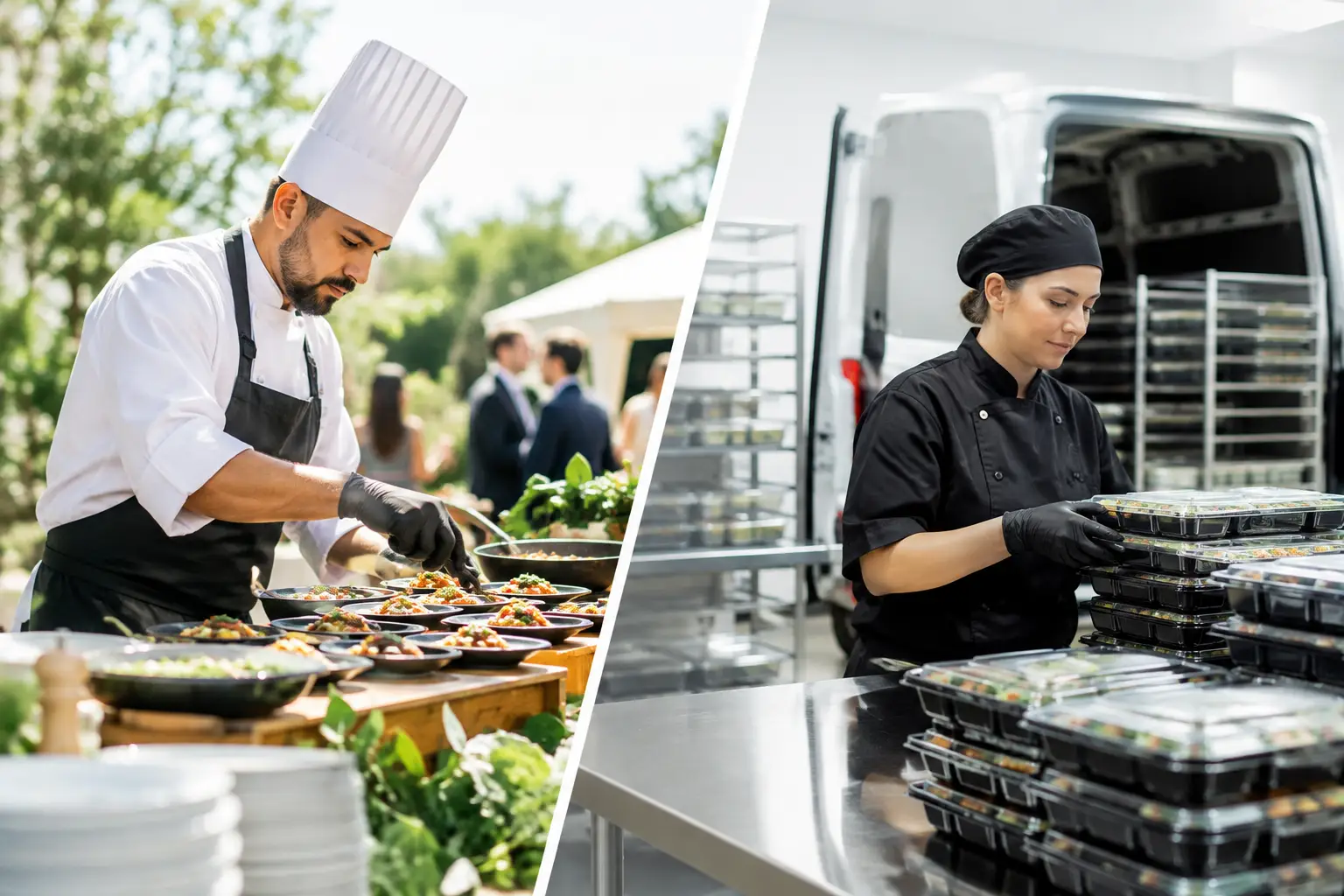
The meal at your celebration is never just a meal. It is the toast after a heartfelt speech, the table where families reconnect, and the thoughtful detail guests remember long after the last dance. When weighing on-site versus off-site catering, the right choice comes down to more than the menu. It affects your planning experience, guest comfort, event timeline, and the level of coordination required on the day.
For weddings, milestone celebrations, and corporate gatherings, both options can create a wonderful dining experience. The best fit depends on your venue, vision, guest count, traditions, and how much of the logistics you would like an experienced team to manage.
What Is On-Site Catering?
On-site catering is prepared and served by the culinary team at your event venue. The kitchen, serving staff, banquet team, and event coordinators work within the same location, supporting your celebration from setup through the final course.
For a wedding reception or formal banquet, this arrangement often brings welcome continuity. The team setting your tables understands the dinner service schedule. The staff coordinating the room knows when speeches, cultural traditions, and first dances are planned. The kitchen can respond quickly when timing shifts, special requests arise, or an extra place setting is needed.
At a full-service venue, on-site catering can also make planning more enjoyable. Instead of coordinating separate conversations with a venue manager, caterer, rental company, and serving staff, hosts can work with a connected team that understands the complete event. That means more time to focus on the moments that matter: your guest list, your décor, your vows, and the people gathered to celebrate with you.
The advantages of an in-house culinary team
The greatest strength of on-site catering is coordination. Food preparation, service, room turnover, table settings, and event timing are planned together rather than managed as separate moving pieces. This is particularly valuable for a wedding with a ceremony and reception in one location, where the transition from one meaningful moment to the next should feel calm and well cared for.
Freshness is another important consideration. Food travels a shorter distance from kitchen to table, which helps preserve temperature, presentation, and quality. Passed appetizers can arrive at the right moment during cocktail hour, plated meals can be served consistently across the room, and late-night offerings can be timed around the energy of the dance floor.
On-site teams are also familiar with the venue’s floor plan, equipment, service entrances, and dining room flow. They know how many staff members are needed to serve your guest count gracefully and how to adapt a service plan for a buffet, family-style meal, plated dinner, or cocktail reception.
For hosts, this can create a clearer picture of the budget. Packages may combine the venue, meal service, staff, linens, bar service, and other essentials. Every proposal is different, but having these details considered together can reduce surprises and make comparisons easier.
When Off-Site Catering May Be the Better Choice
Off-site catering is prepared by a caterer that brings food, staff, and sometimes equipment to a venue or private location. It can be an excellent choice when you are hosting at a home, outdoor property, community hall, or venue without its own kitchen and culinary program.
It may also suit an event centered on a very specific restaurant, family recipe, regional cuisine, or specialty food concept that is not available through the venue’s regular menus. For some families, honoring a cherished cultural tradition through a particular caterer is a meaningful priority. In those cases, flexibility can be worth the additional planning.
Off-site catering can give hosts a broad field of culinary choices, but it also introduces practical questions. Will the caterer have access to a working kitchen, refrigeration, power, water, and a suitable loading area? Who provides tables, chafing dishes, serving utensils, china, glassware, and staff? How long will food travel before service? These details should be addressed early, especially for larger guest counts.
The logistics behind a successful off-site meal
A skilled off-site caterer can handle complex events beautifully, but their work depends on careful advance planning. Unlike an on-site culinary team, they need time to arrive, unload, prepare the service area, and ensure food can be held safely at the proper temperature. If your event is outdoors, they may also need a contingency plan for rain, wind, heat, or limited access.
Costs can be less straightforward as well. A per-person menu price may not include delivery, staffing, rentals, kitchen access fees, service equipment, gratuities, or cleanup. That does not make off-site catering a poor value. It simply means hosts should ask for a detailed proposal that shows what is included and who is responsible for each event-day task.
On-Site Versus Off-Site Catering: Key Questions to Ask
Rather than beginning with the assumption that one option is always better, consider the experience you want for your guests and yourselves. A few questions can bring the decision into focus:
- Does your venue have a professional kitchen and an experienced banquet team?
- Is there a specific cuisine, cultural menu, or specialty caterer essential to your celebration?
- Will the caterer need to bring cooking equipment, rentals, or additional service staff?
- How important is it to have one team coordinating the meal, room setup, and reception timeline?
- Are there dietary needs, children’s meals, or custom menu requests that require special planning?
- Does your budget account for all service, rental, delivery, and cleanup costs?
For many couples, the answer becomes clear after a venue tour and menu conversation. Seeing the dining spaces, asking how dinner service is paced, and discussing your guest count with an event professional can reveal whether an in-house approach offers the confidence and convenience you value most.
Choosing for Weddings and Social Celebrations
A wedding day carries many moving parts. There may be a ceremony, cocktail hour, formal photographs, speeches, a cake cutting, dances, and late-night dining. On-site catering often supports a more relaxed experience because the venue team can coordinate these moments around service without requiring you to direct vendors throughout the evening.
This is especially helpful when families are hosting a shower, baptism, anniversary, engagement celebration, or birthday banquet. Hosts can spend more time welcoming loved ones and less time checking whether the caterer has arrived, where equipment should be placed, or when dishes need to be cleared.
That said, off-site catering may be the right path when your celebration has a deeply personal culinary focus. The key is finding a venue and caterer willing to communicate openly, respect your traditions, and establish a clear plan before guests arrive. A beautiful celebration should feel personal, not standardized.
Choosing for Corporate Events
For meetings, awards dinners, staff holiday parties, and client events, catering should reinforce the purpose of the gathering. A well-paced lunch keeps a meeting productive. Thoughtful refreshments encourage conversation. A polished dinner service gives guests room to recognize achievements and build relationships.
On-site catering can be particularly effective for corporate hosts who need dependable timing and a single point of contact. When the room setup, audiovisual schedule, meal breaks, and service staff are coordinated by one experienced venue team, planners can stay focused on attendees and business objectives.
Off-site catering can work well for workplaces and unconventional venues, particularly when the event has a casual format or a specific food concept. Just be sure the caterer understands access times, dietary requirements, setup limitations, and the exact schedule for breaks and presentations.
The Value of a Thoughtful Menu Consultation
Whether you select on-site or off-site catering, ask for a menu conversation rather than simply choosing items from a list. Share the feeling you hope to create. Is your wedding dinner elegant and formal, warm and family-centered, or lively and generous? Are you planning an afternoon shower with light fare or an evening celebration with a multi-course meal? Does your corporate event call for efficient boxed lunches, a buffet that encourages mingling, or a seated awards dinner?
The best culinary plan reflects the rhythm of your event. It also considers dietary accommodations with care, so every guest feels welcomed at the table. A knowledgeable team can help you balance favorite dishes with practical service choices that work beautifully for your room, timeline, and guest count.
At Renaissance by the Creek, personalized planning and diverse in-house catering are designed to bring the food, service, and celebration together with gracious attention to every detail. Book a venue tour and speak with the event team about the kind of gathering you want your guests to remember: one where you can be fully present for every toast, embrace, and joyful moment.



Leave A Comment